I’m trying to connect older serial devices to my Windows PC, but I’m having trouble finding a stable virtual COM port driver that works reliably. I’ve tried a couple of options, but they keep disconnecting or causing errors. Does anyone have recommendations for the most reliable or best virtual COM port driver for Windows?
Virtual Serial Port Software: My Two Cents
Let’s just get one thing clear—“the best” is subjective, right? There’s always that one tool everyone tosses in your face, and for virtual serial port drivers, this one comes up:
That Time I Jumped In Feet First
Back in the day (think early web 2.0 and clunky CRTs), I was neck-deep in a project, pulling my hair out over hardware I couldn’t even physically touch. I remember being so annoyed at having to plug and unplug cables just to fake out a COM port for testing. Found this tool, skeptically gave it a spin…and then, honestly, forgot I was even using it because it just. kept. working.
What Actually Works? (For List Lovers)
- Up and running in minutes.
- No weird Windows registry hacks.
- Haven’t seen it bug out after over a decade (+change) of my relentless abuse.
- Updates don’t break old configs (thank the dev gods).
There’s Gotta Be a Catch, Right?
You ever use something for so long you start questioning if you missed something? Like, am I just lucky I’ve never had to hunt for support? Maybe, but this thing has been a silent assistant in my dev stack for 15 years straight.
Why I Didn’t Go For Anything Else
To be real, I grabbed the first tool I saw with good reviews and stuck with it out of sheer laziness and the “if it ain’t broke” mentality. All those years later? Still gets the job done, no drama, no fuss.
In Short
You stumble on a tool like this, it’s sorta like finding that hoodie you never want to wash 'cause it fits right. If you’re coding, testing, or just being a serial port troublemaker, this one’s done the trick for me—smooth and drama-free. Someone else might swear by another, but I stopped looking.
31 Likes
If you’re still on the hunt for that magic bullet to keep your old serial gadgets talking happily to your Windows machine, you’re definitely not alone. @mikeappsreviewer already sang the praises for one tried-and-true tool—but let’s not put all our eggs in just one “it worked for me!” basket, right?
I’ll admit, I’ve had a few misadventures with random freeware and those so-called “universal” COM port emulators. Most of ‘em end up with me cursing at Device Manager, drivers flaking out after sleep/hibernate, or ghost ports multiplying like rabbits. Infuriating.
Now if reliability with legacy devices is your main issue—disconnects, application freezes, just straight-up weirdness—then seriously consider giving Virtual Serial Port Driver a spin. I know, I know, it’s commercial, and no one likes paying for drivers, but the peace of mind after trying every forum-favorite hack? Worth it IMO.
Some folks rave about open-source options, like com0com or VSPE. Sure, they can work, but in my experience they’re either a hassle with signed drivers or just won’t play nice with all hardware/OS combos. If you’re a glutton for config pain, go for it, but if not…
The main catch (not a dealbreaker for most) is that Virtual Serial Port Driver isn’t freeware. But it’s rock solid, supports all the modern and legacy OS flavors, integrates clean with test/debug tools, and actually does what it claims—keeps virtual COM ports alive, stable, and doesn’t randomly go poof.
So yeah, if you just want plug-n-play, less drama, and a COM port emulator that does what it’s supposed to, check out this popular serial port emulator. Saves time, sanity, and a lot of “Why is my device not detected??” moments. If you’re tired of registry editting and fighting with unsigned drivers, this one is as close to set-and-forget as it gets.
If someone has a rock-solid, 100% free alternative that never borks itself, seriously, spill the secret—I’ve yet to find it.
Okay, I’ll play devil’s advocate here. Everyone is chanting the praises of Virtual Serial Port Driver like it’s the holy grail, but… I mean, yeah, it’s good—hell, it does what it says on the tin and, unlike some serial emulators, doesn’t totally melt down when Windows wakes up from hibernate. Fine. But you do have to PAY for it. That’s kinda salty if you just want to get your 90s barcode scanner talking to your PC for free.
Now, @mikeappsreviewer and @byteguru both pretty much worship that tool, and for stability, it’s hard to argue against them. Also, for not getting trashed by Windows Updates or doing the whole “oops, your port is gone” routine, it’s king. But—if you really can’t justify buying a license (or you just like pain), com0com or VSPE still exist, but be ready for some hoops. Signed drivers are still a headache sometimes, and half the time your antivirus will throw a fit.
Just a heads up, though: if your problem is random disconnects or serial stuff vanishing from device manager, that’s almost always dodgy driver issues. Sure, open-source can sometimes be patched together, but if you want stuff that won’t randomly evaporate in the middle of a job, pony up for Virtual Serial Port Driver. Sometimes paying stops the hair-pulling, ya know?
TL;DR: If you’re serious about connecting crusty hardware to new Windows boxes and want minimal drama, try creating stable virtual COM ports in seconds. Yeah, it costs. But so does your sanity.
Anyone got a unicorn freeware option I don’t know about? Hit me. Otherwise, the paid route is boringly reliable. Welcome to serial port purgatory.
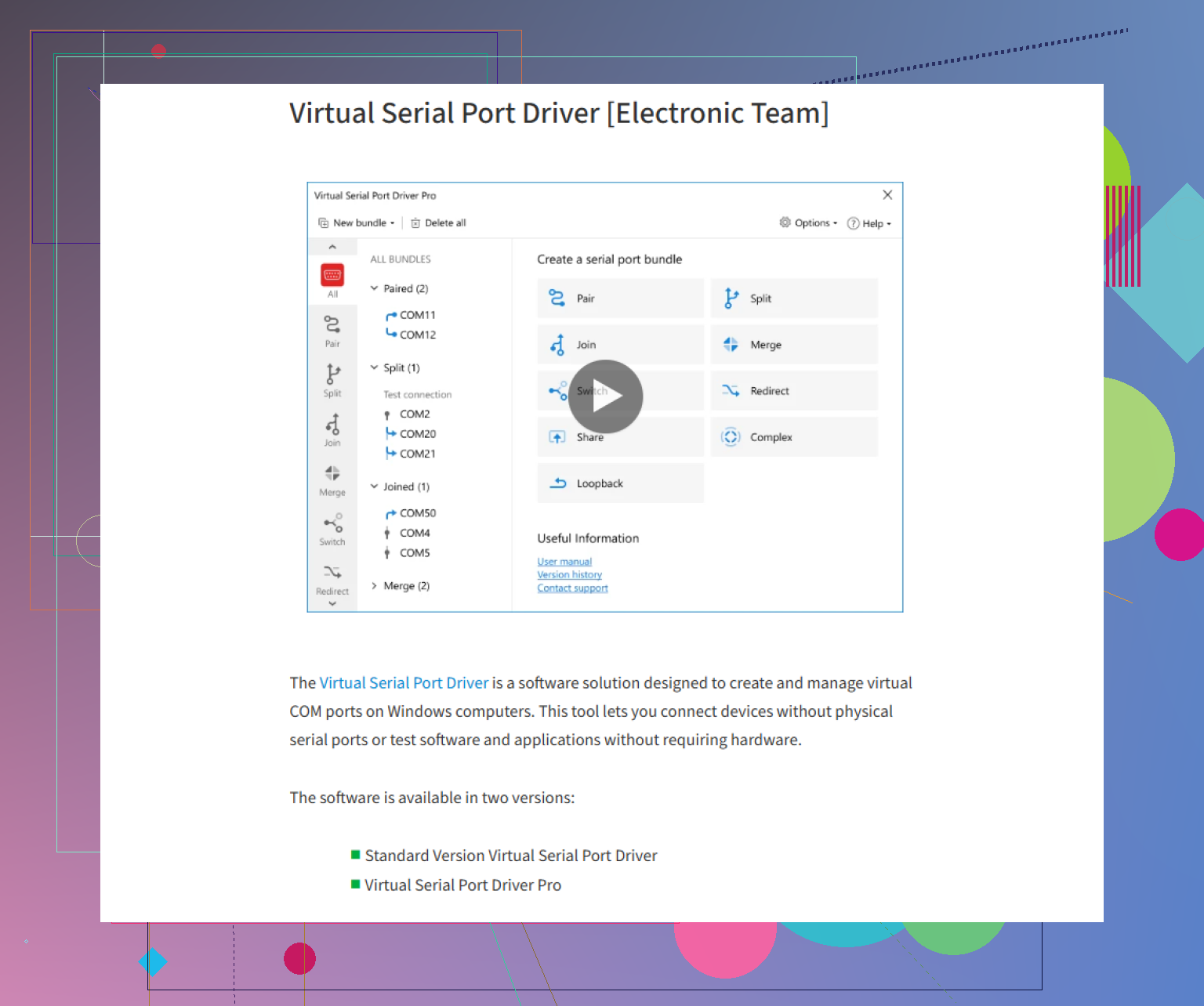
Let’s break this down. If you need virtual COM ports that just work—no random dropouts, no device manager ghosting—yeah, Virtual Serial Port Driver is the steadier sidekick. The upside? It’s dead simple, rarely punts you into driver hell, and shrugs off Windows updates like a tank. Bonus: the interface won’t punish you for being new or in a hurry. Downsides? It’s not free—so if you’re only linking up a serial dinosaur for a one-off project, sticker shock is real. Still, considering the alternatives like com0com and VSPE; they feel like a coin flip. Sometimes they sail through, other times you’re wrestling unsigned driver pop-ups and overzealous antivirus warnings, especially as Windows security gets increasingly grumpy.
Real talk: If you want plug-and-play and a setup you’ll forget is running, you pay a bit and move on with your life. Power-users or tinkerers who can sacrifice a weekend might stick with open-source options, if only for the extra control or the love of fiddling.
Pros of Virtual Serial Port Driver:
- Stable, no nonsense
- Minimal config drama
- Good with Windows updates
- Old serial gear compatibility? Check
Cons:
- Not free (duh)
- May feel overkill for tweakers or one-off uses
Others here have loyalty to the usual suspects, but if you want “it just works,” Virtual Serial Port Driver is still the most boringly reliable option. You decide what your time and patience are worth.
Before buying more software, check your physical connection. For an RS-232 device, try a USB-to-RS232 adapter with Windows support and COM port retention, such as StarTech’s FTDI-based models. This connects your hardware through USB rather than adding another emulator.
Install the adapter manufacturer’s driver, then open Device Manager and find its COM number under Ports. Select the same port in your app.
Check your device’s manual for baud rate, parity, and flow-control settings before your next conection attempt. If you already use an adapter, share its model and your Windows version beofre spending more.
Don’t run two emulators at once while you’re testing. If you’ve still got a half-installed com0com sitting in Device Manager and then layer another driver on top, you’ll chase phantom disconnects that have nothing to do with either tool. Rip the old one out first, reboot, then try a clean setup.
The thing nobody here has flagged: a lot of what looks like driver flakiness is actually Windows power management. USB selective suspend and the ‘allow the computer to turn off this device to save power’ checkbox on the port will happily kill a link during idle stretches, and then you blame the software. Go into the adapter or hub properties under Device Manager and untick that. Half the ‘it vanished from Device Manager’ stories I read trace back to exactly this, especially on laptops.
@swiftmaker90 is right that you should sort the physical side before buying anything. FTDI-based adapters really are the sane default, and the retention setting matters if your app hardcodes a COM number. But that advice only covers the case where you actually have hardware to plug in. If you’re bridging two applications, or feeding data to something that expects a port that isn’t physically there, no adapter solves that and you’re back to a virtual solution.
On the paid tool everyone’s circling, the part worth knowing is that Virtual Serial Port Driver lets multiple applications open the same virtual port at once. That’s genuinely handy when you want a logger sniffing traffic while your main app talks to the device, something a plain null-modem pair won’t give you cleanly. Whether that’s worth the license depends entirely on if you need that behavior or just a simple pair.
My honest take: figure out first whether your problem is hardware, power settings, or an actual need for virtual ports. Fix the free stuff (power management, leftover drivers, correct baud and flow control) before you spend a cent. If after all that you still need port pairs or sharing and don’t want to babysit unsigned drivers, then paying makes sense. Not before.