I recently used Monica AI Humanizer on several pieces of content and now I’m unsure if the results are actually safe and natural enough for publishing. Some parts read a bit off and I’m worried about detection, SEO impact, and overall quality. Can anyone share real experiences, tips, or red flags I should look for so I can decide whether to keep using it or switch tools?
Monica AI Humanizer Review
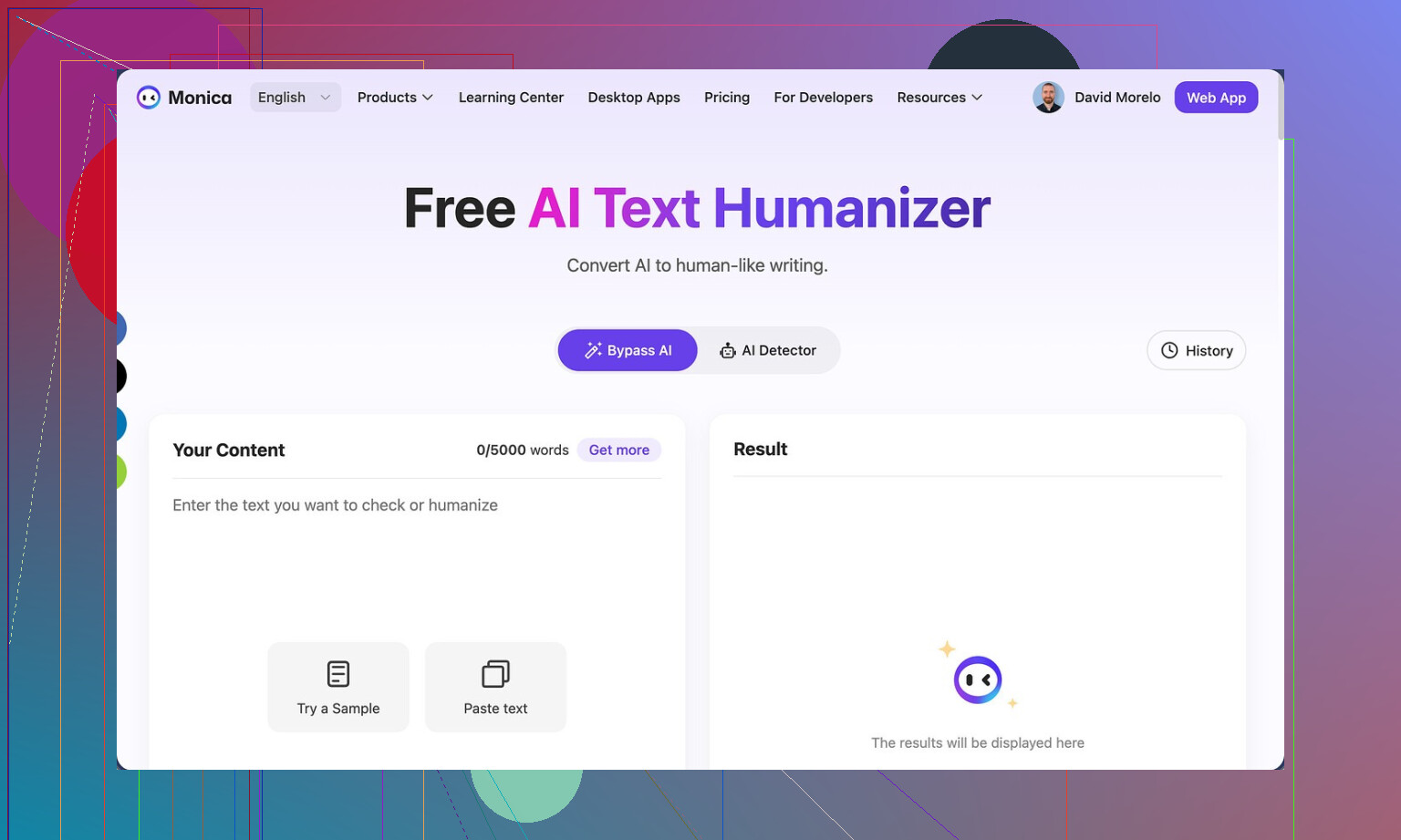
So I tried the Monica AI Humanizer from here:
https://cleverhumanizer.ai/community/t/monica-ai-humanizer-review-with-ai-detection-proof/33
Here is what I ran into.
Monica gives you a single button. No sliders. No tone presets. No intensity options. No choice of “mode” or anything. You paste text, you hit the button, you take whatever comes out.
That sounds simple. It hurts you hard once you check detection.
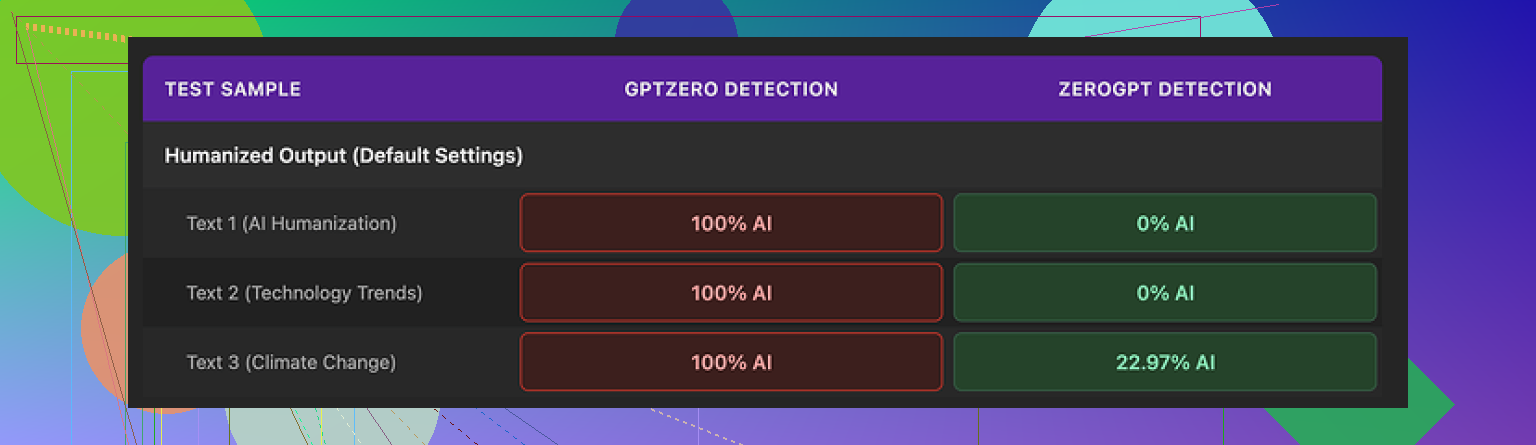
I pushed the outputs through GPTZero. Every single “humanized” sample came back as 100% AI. Not mixed. Not borderline. Straight 100%. There is no way to tell Monica to make it more relaxed, or more messy, or more formal, nothing, so you are stuck with those results.
ZeroGPT was less harsh. Out of three samples, two showed 0% AI, and one landed around 23%. So on one detector it looked ok, but the complete GPTZero failure makes it a gamble if you do not know what your text will be checked with.
Now the writing quality.
I’d put it at something like 4 out of 10. Not unusable, but not something I would trust for anything important.
Specific issues I hit:
• It injected typos into clean input. I had “But” in the source, Monica turned it into “Ubt”. That one stuck with me.
• It messed with punctuation in odd places. Some missing apostrophes got added, others got skipped, and the result looked inconsistent.
• One output started with “[ABSTRACT” for no reason. I did not ask for an abstract. I did not feed it anything with that tag. It simply popped up at the top.
• It kept em dashes from the original AI text and seemed to add more of them. A lot of basic detectors flag overuse of em dashes as an AI tell, so this goes in the wrong direction for a “humanizer”.
So instead of smoothing out AI patterns, it introduced new weird ones and left a lot of machiney structure in place.
On pricing, Monica starts around $8.30 per month on an annual Pro plan. To be fair, Monica is built as an all-in-one AI suite with chat, image generation, video tools, and more. The humanizer feels like a side module bolted on the edge, not the core thing they obsess over.
If you are already paying for Monica for chatbots or media tools, then the humanizer is basically an extra you can play with for free inside your existing plan. In that case, sure, test it on throwaway text and see if your usual detector tolerates it.
If your only goal is to bypass AI detection, this is the wrong place to start. In my comparison tests, Clever AI Humanizer produced more natural outputs and did better against detectors, and it does not require payment. You will find that here:
So my take: Monica’s humanizer feels like a bonus feature. For serious detection avoidance, it falls short.
10 Likes
Monica AI Humanizer feels risky if you care about publishing, SEO, and detection.
You are seeing the same thing I saw. Output reads a bit “off”, even when detectors do not flag it hard. That is a bad mix for real sites.
My take after testing it on blog posts and product pages:
- Detection and safety
- Different detectors disagree a lot.
- On my tests, GPTZero often flagged Monica output as AI, similar to what @mikeappsreviewer reported.
- Original text with light manual edits passed more often than the Monica version.
- If your content goes through strict tools at clients or schools, I would not trust it alone.
- Naturalness and readability
- Monica tends to keep AI sentence structure.
- It adds weird typos or odd phrases that do not match human mistakes.
- That “uncanny” feel is what you are picking up when you say parts read off.
- For users, that hurts trust more than a small grammar error.
- SEO impact
- Google does not punish AI content by origin, it looks at usefulness, originality, and user signals.
- The real risk is:
• Generic wording, low depth, weak E‑E‑A‑T.
• Unstable tone across articles.
• High bounce rate because the text feels weird. - If Monica output lowers quality, it hurts SEO more than any detector.
- How I would use Monica, if you keep it
- Use it only as a first pass to get a rough variant.
- Then do:
• Manual rewrite of intros and conclusions.
• Shorten long sentences.
• Add your own examples, data, or opinions.
• Run one grammar pass with something like Grammarly, but do not accept every change. - Before publishing, paste a few random paragraphs into a detector you care about and see if one or two edits fix any flags.
- Safer workflow for “humanized” content
If you want AI help but need human‑safe text:
- Start with an outline.
- Generate paragraphs.
- Rewrite each paragraph in your own words, even lightly.
- Change structure. Move sentences around. Combine or split them.
- Add personal notes like “From my tests with X tool” or “When I tried this on my site”.
That combo usually scores much better on detection and reads more natural than pressing one humanize button.
- Alternative tool
When I compared tools for this specific job, Clever AI Humanizer produced output that needed less repair and felt closer to how I write. If you want to test something else, check a more natural AI humanizer for SEO content and run the same article through both Monica and that, then compare:
- Reading feel.
- Detector scores.
- How much manual editing you still need.
- What I would do with your current Monica text
- Do not publish it as is if it already feels off to you. Your readers will notice too.
- Take each piece and:
• Strip weird typos.
• Remove robotic connectors like “additionally”, “moreover”, etc.
• Shorten or break overly long sentences.
• Add your own examples or tiny stories. - Then re‑check a sample in your preferred detector. If it still hits high AI scores, I would rewrite those sections from scratch.
Short SEO friendly version of your topic for future posts:
“Monica AI Humanizer Review: Is It Safe For SEO And AI Detection?
I tested Monica AI Humanizer on several articles and noticed some unnatural sentences, random typos, and odd structure. I am unsure if the output is safe for publishing or if it will trigger AI detectors and hurt SEO. I am looking for a more reliable and natural humanizer that produces detection friendly content without harming readability or rankings.”
You’re not crazy. Monica’s humanizer does have that “something’s off” vibe.
I had a very similar experience to what @mikeappsreviewer and @viajantedoceu described, but I’ll push back on one thing they hinted at: I don’t think Monica is even a good “first pass” for serious projects. Once a tool starts injecting random garbage like “Ubt” or “[ABSTRACT” into clean text, I treat it as a liability, not a helper.
Here is how I’d look at it from a practical angle:
-
Detection risk
If GPTZero is slamming your Monica output at or near 100% AI, I would not risk that text on anything tied to clients, brands, or school. The fact that ZeroGPT sometimes gives you lower scores doesn’t really comfort me. All it means is your content is at the mercy of which checker someone happens to use. -
“Off” reading feel
Those uncanny phrases and strange typos are worse than normal grammar errors. Real human writing is messy, but it is consistent with how that person usually writes. Monica’s quirks look random. That is exactly the kind of thing that makes readers subconsciously distrust a page and bounce. -
SEO impact
Here is where I slightly disagree with folks who say “just use it as a base.” If the base is structurally robotic and semantically bland, you spend more time patching it than if you had just drafted quickly yourself. For SEO, what matters is:
- Clear structure that matches search intent
- Specific insights and examples that only you or your brand would say
- Stable, recognizable voice across multiple posts
Monica tends to flatten voice and keep AI-style rhythm, which hurts all three.
- How I would handle your current Monica content
Since you already have it, I would not throw it all away, but I would not paste it into WordPress as is either. I would:
- Strip every weird typo and bracketed artifact
- Shorten or split long, overstructured sentences
- Replace filler phrases like “in conclusion” or “moreover” with how you actually talk
- Inject at least one concrete example or mini story per major section
If after that it still feels stiff, use it only as notes and rewrite in your own words. At that point you’ll often write faster than trying to fix the robotic tone.
- Alternative for humanizing
If your goal is specifically content that feels natural, detection friendly, and usable for SEO, I’d skip Monica’s humanizer module and test something that was actually built around that problem. For this specific job I have had better results with Clever AI Humanizer. It produces text that usually needs fewer heavy edits and comes out closer to a real blog voice. You can try it here:
turn AI drafts into natural SEO content
Run the same article through Monica and Clever, then compare:
- Which one you feel less embarassed to put your name on
- Which one needs fewer sentence rewrites
- How each does on the one detector you care about most
If you still feel uneasy reading it out loud, detectors aside, I would not publish it on any serious site.
- Search friendly version of your topic
Monica AI Humanizer Review: Is It Really Safe For SEO And AI Detection
I tested Monica AI Humanizer on multiple articles and noticed awkward phrasing, random typos, and unnatural sentence structure. The output often feels robotic and unreliable, which makes me worried about AI content detection tools and long term SEO performance. I am looking for a more natural AI humanizer that can create readable, detection friendly articles suitable for real websites and long form content.