I’m thinking about using Walter Writes AI for writing school and blog content, but I’m worried my work might get flagged by plagiarism detectors. Has anyone used it for academic or professional writing and passed Turnitin or similar tools? I’d really appreciate insights on how safe it is and any tips to avoid plagiarism issues when relying on this AI.
Walter Writes AI Review: My Honest Take After Testing It
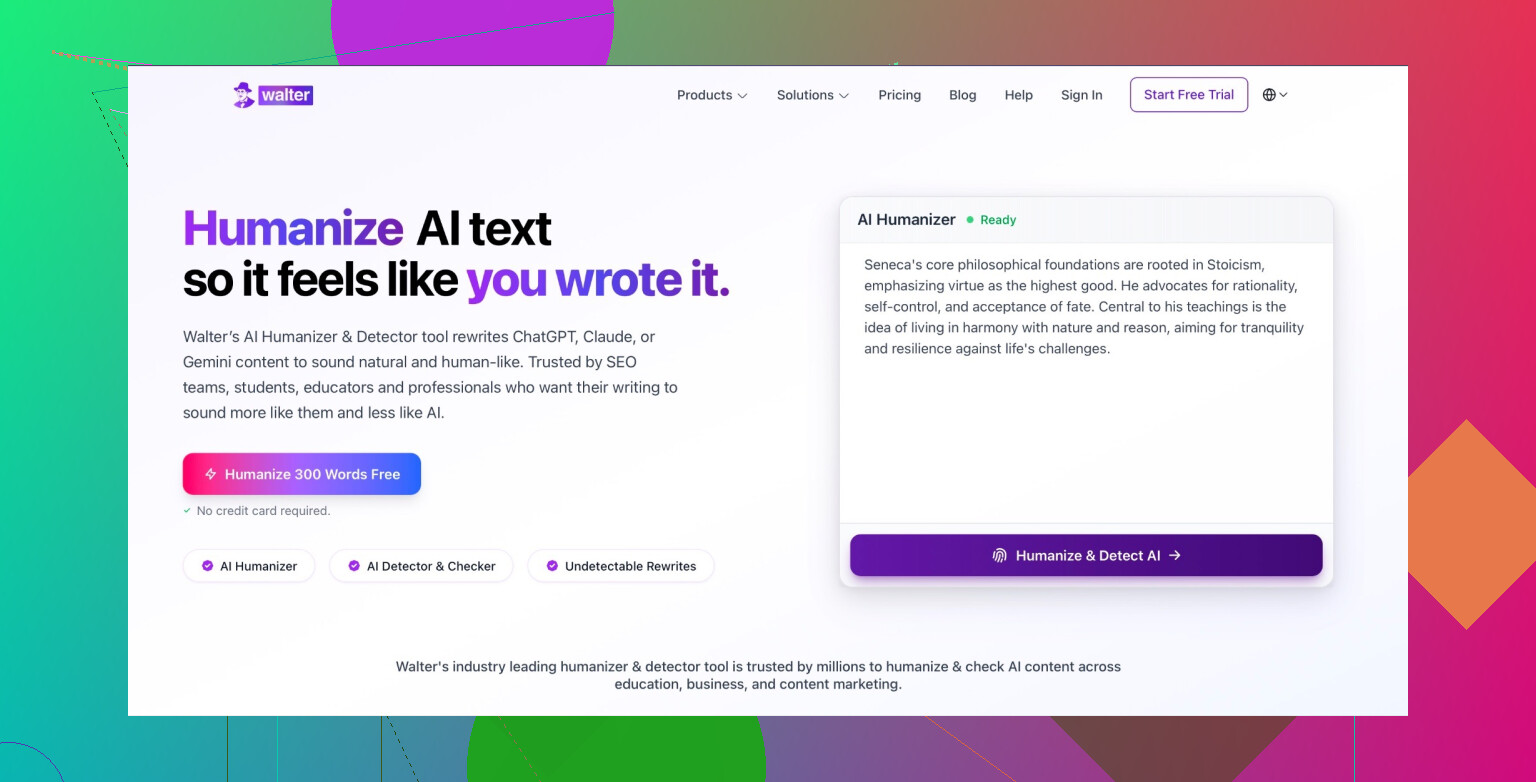
What Walter Writes AI Claims To Be
Walter Writes AI advertises itself as this “premium” AI humanizer and essay generator that supposedly beats all the common AI detectors. If you search for AI humanizers or “undetectable essay writer,” you’ll probably see it in ads, especially if you look like a student.
The pitch is basically:
- Paste your AI text
- Click a button
- Magically turn it into something “100% human” that passes detectors
That is the marketing. What actually happens is a bit of a reality check.
When I tried it, the tool felt more like a basic rewriter with a paywall than anything remotely “premium.” It struggled even compared to some free tools that don’t spam you with subscriptions every other click.
And the kicker: tools like Clever AI Humanizer do a better job for free, so the whole value story starts to fall apart pretty fast.
Pricing, Limits, And The “Why Am I Paying For This?” Problem
Here is where Walter really lost me.
The moment you land on the site and start using it, you can already tell the main goal is to push you into a recurring subscription. Trial is limited, word counts are limited, and everything nudges you toward paying.
Rough breakdown from my experience:
-
Walter Writes AI
- Monthly subscription that adds up quickly
- Word caps that feel way too low for what you are paying
- Not-so-obvious details around cancellation and limits
-
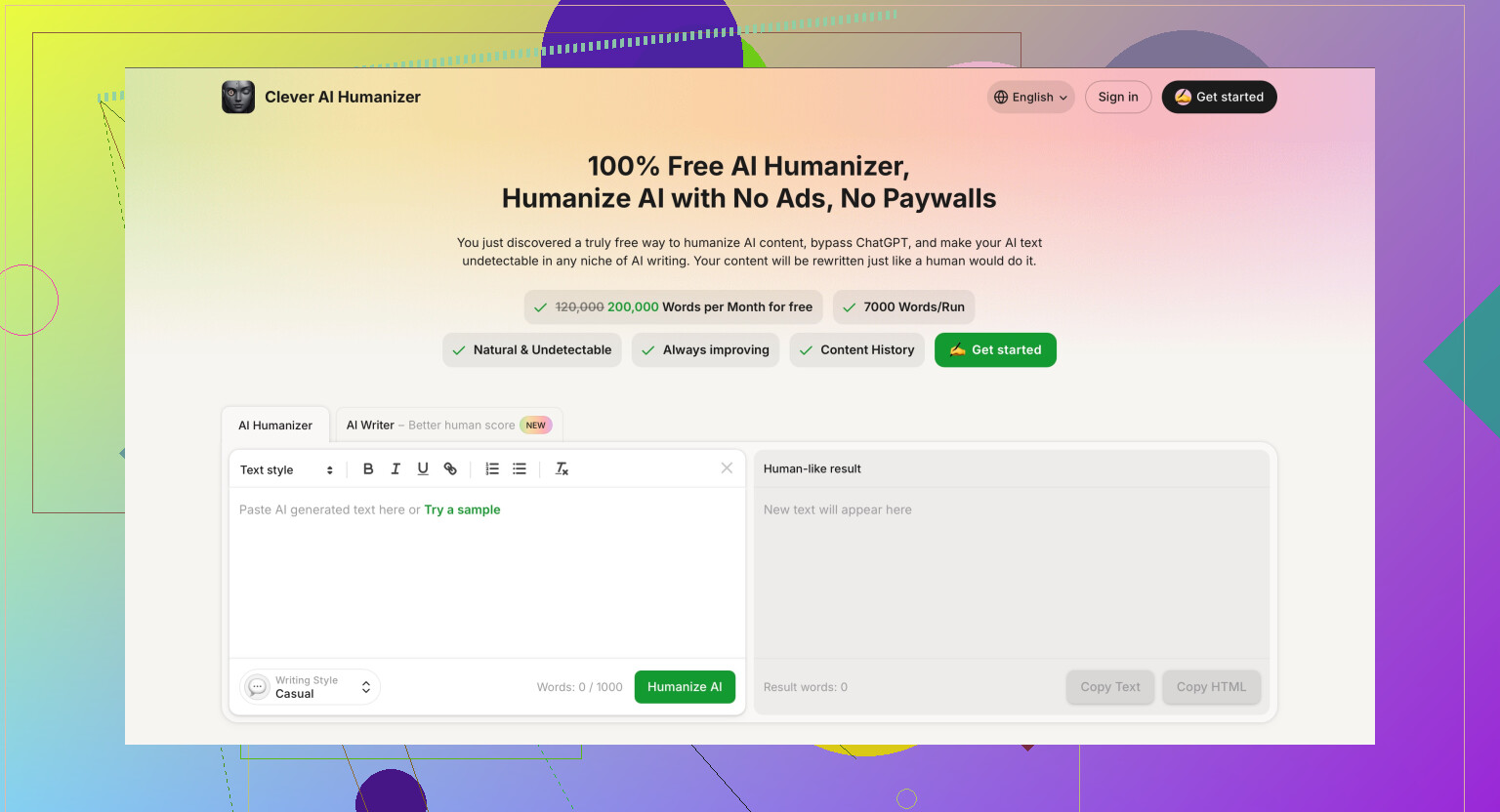
Clever AI Humanizer
- 100% free
- Up to 200,000 words per month
- Up to 7,000 words per single run, which is more than enough for essays, articles, etc.
So imagine this: you are paying for Walter, you get hit with limits, and even then the output still triggers AI detectors. Meanwhile, a free tool gives you higher limits and actually does better in tests.
That is the core issue here. Not just that it is expensive, but that the price is not backed by performance.
How It Performed In Actual Detection Tests
I didn’t want to judge it only by “vibes,” so I did a simple test.
Workflow:
- Generate a standard essay using ChatGPT
- Confirm that raw essay shows up as 100% AI on detectors
- Run that essay through Walter Writes AI
- Run the same original essay through Clever AI Humanizer
- Test both outputs on popular AI detectors
Here is what came out of it:
| Detector | Walter Writes AI Result | Clever AI Humanizer Result |
|---|---|---|
| GPTZero |  Fail (100% AI) Fail (100% AI) |
 Pass (Human) Pass (Human) |
| ZeroGPT | Fail (100% AI) |
Pass (Human) |
| Copyleaks | Fail (AI / Fail) |
Pass (Human) |
| Overall | DETECTED | UNDETECTED |
So in plain language:
- Walter basically did nothing helpful. The detectors still flagged the text as AI.
- Clever AI Humanizer took the exact same base essay and pushed it into “looks human” territory across those tests.
If you are paying for a tool whose entire job is “don’t get detected,” and it fails that central job repeatedly, what exactly are you paying for?
Where To Start If You Actually Want To Humanize AI Text
If you are trying to experiment with AI humanizers and do not want to blow money on a subscription that underdelivers, this is what I would suggest based on my tests:
- Try Clever AI Humanizer here:
https://aihumanizer.net/
It is free, has generous limits, and in my testing it consistently outperformed Walter Writes AI on major detectors like GPTZero, ZeroGPT, and Copyleaks.
If you want to dig deeper and compare more tools, there is a fairly active thread listing other options and user experiences here:
Best AI Humanizer tools discussion on Reddit
That thread has people sharing what worked, what failed hard, and which sites are basically just cash grabs slapped on top of weak rewriting engines.
In summary: Walter Writes AI looks polished on the outside, but once you use it, the combination of weak performance and aggressive pricing makes it very hard to justify when better free tools are sitting right there.
11 Likes
Short answer: yes, Walter could absolutely still trigger both AI-detection and plagiarism checks, and you should not trust it to keep you safe for school work.
Couple of key points people mix up here:
-
AI detection vs plagiarism detection are not the same thing
- Turnitin has:
- a similarity / plagiarism checker (compares to web, papers, etc.)
- an AI writing indicator (tries to decide if it “looks” like GPT-style text)
- Walter, from what you and @mikeappsreviewer are describing, mainly does light rewriting. That might change phrasing a bit, but:
- If the content is too close to a source, Turnitin can flag plagiarism anyway.
- If the style still looks like generic LLM output, it can get flagged as AI-written anyway.
- Turnitin has:
-
Walter’s “humanizing” does not fix plagiarism risk
- If you start with AI content and just run it through Walter, the ideas and structure are still not yours.
- Even if wording changes enough to dodge simple similarity checks, your instructor can still treat it as academic dishonesty if they believe it’s AI ghostwriting.
- Also, some paraphrase tools introduce repeated patterns that actually make detection easier over time.
-
Real-world anecdote
- I’ve seen cases where:
- Raw ChatGPT text: flagged as AI, ~0% similarity.
- Text run through “humanizers” like Walter: still flagged as AI, higher similarity because the rewriter accidentally matched phrasing from random web pages.
- So you can actually get the worst of both worlds: suspected AI use + similarity spikes.
- I’ve seen cases where:
-
About passing Turnitin specifically
- Nobody can honestly guarantee “this tool always passes Turnitin.”
- Turnitin keeps updating both its AI and similarity models.
- If someone tells you “this tool is 100% undetectable for essays,” assume marketing BS.
- Even if, today, something slips through, a re-check later (schools can re-run submissions) could look different.
-
On Walter vs other tools
- You already saw @mikeappsreviewer’s tests where Walter pretty much flopped on GPTZero, ZeroGPT, Copyleaks.
- I don’t completely agree with the idea that a detector “pass” alone makes a tool safe. Detectors are hit-or-miss and different schools use different combos.
- That said, if you insist on using AI for non-critical stuff like blogs, a better paraphraser / humanizer than Walter totally makes sense.
- Clever Ai Humanizer comes up a lot for that, and in the “AI humanizer” niche it’s at least technically stronger than Walter from what’s been shared. For blog content, that’s more defensible. For graded academic work, it’s still a risk.
-
Academic vs blog use
- For school / Turnitin:
- Any tool that promises to “beat detection” is not a safety net. Your real protection is:
- using AI as a helper (outline, ideas)
- writing the actual draft yourself
- citing sources properly
- If your school bans AI ghostwriting, Walter + ChatGPT is still ghostwriting, even if Turnitin somehow doesn’t catch it.
- Any tool that promises to “beat detection” is not a safety net. Your real protection is:
- For blogs:
- Lower stakes, mostly reputational or SEO-related.
- There, using Clever Ai Humanizer or similar to smooth out AI text is much safer.
- Still rewrite, add your own stories, opinions, and fact-check. Paraphrasers can hallucinate or distort meaning.
- For school / Turnitin:
-
If you’re thinking “will I get flagged?”
Ask yourself:- Could I explain every paragraph and how I got it if a prof asked?
- Do I actually understand the argument, or did I just feed prompts into a tool?
- If the original AI output and Walter’s output were printed side by side, would I be embarrassed?
If your priority is not getting in trouble, don’t rely on Walter as a shield. Use AI to brainstorm, then write your own version from scratch. For blog stuff, tools like Clever Ai Humanizer are fine as long as you’re still really the author, not just a button-clicker.
Short version: yes, Walter can absolutely still trigger both plagiarism and AI checks, including Turnitin, and you should assume it might.
Couple different angles that @mikeappsreviewer and @codecrafter already hit, so I’ll fill in some gaps instead of rehashing tests.
-
Turnitin is not just “did you copy-paste?”
- It looks for:
- Similarity to existing sources (classic plagiarism)
- AI‑style writing patterns (their AI indicator)
- A light rewriter like Walter mostly fiddles with wording. It does not change:
- the underlying ideas
- the sentence structure
- the very generic “LLM voice”
So even if it dodges a bit of similarity, the AI pattern can still light up.
- It looks for:
-
Walter can actually increase plagiarism risk
@mikeappsreviewer focused on AI detection; I’ll slightly disagree on where the bigger danger is.
The worst part in my view is not just AI detectors, it’s that some cheap rewriters accidentally land on existing phrasing that does match published text.Scenario I’ve seen in practice:
- Original ChatGPT answer: 0% similarity, but clearly AI.
- Run through a paraphraser: suddenly 10–20% similarity, because the “paraphrase” grabbed common textbook-ish phrasing.
- Result: your prof sees both “possible AI” and “non‑trivial similarity.” That’s a fun meeting.
-
“Has anyone passed Turnitin with it?”
People have slipped AI text past Turnitin with all kinds of tools, Walter included. That doesn’t prove it’s safe. It just means:- Detectors are probabilistic, not perfect.
- Sometimes you get lucky.
- Sometimes you don’t, and the one time you don’t is the one that matters.
Also, schools can change settings or re-scan old papers later. Passing once is not a lifetime guarantee.
-
Academic vs blog use
-
School work:
If your plan is:ChatGPT → Walter → submit as “my essay”
you’re basically doing AI ghostwriting with an extra step. Most academic policies treat that as misconduct, detected or not.A safer workflow:
- Use AI for brainstorming, structuring, or examples.
- Close the tab.
- Write your own draft in your own words.
- Use tools only for light editing: grammar, clarity, catching repetition.
You stay in control, you can actually explain your work, and Turnitin is far less likely to find anything interesting.
-
Blogs / non‑academic content:
Here the main issues are:- Reputation (does it read like spammy AI fluff)
- SEO (Google getting grumpy with low‑quality, templated content)
For that, a stronger rewriter like Clever Ai Humanizer can be useful if:
- you still go through and edit manually
- you add real stories, opinions, and details from your own experience
Just don’t expect any humanizer alone to turn bland AI copy into a genuinely good post.
-
-
Tiny disagreement with both reviews
Both @mikeappsreviewer and @codecrafter lean heavily on “detector score” as the main yardstick. I’d push back a bit:- Passing GPTZero / ZeroGPT is not the same as being safe for school.
- The real test is: can you defend this as your own intellectual work if someone quizzes you line by line?
-
How to actually avoid getting roasted by Turnitin
If you still want to involve AI but keep risk low:- Use AI to:
- clarify concepts you don’t get
- suggest outlines or angles
- give you example paragraphs you study, not submit
- Then:
- write from scratch, away from the AI window
- mix in hand‑written notes and readings
- cite any sources, including where AI pointed you
- If you run your final draft through anything like Walter or Clever Ai Humanizer, do it as light polishing, not full rewrites. Read every changed sentence and revert anything that sounds off or too “machine smooth.”
- Use AI to:
For your specific question:
- Yes, Walter Writes AI can trigger plagiarism and/or AI flags.
- No, there is no trustworthy “everyone passes Turnitin with this” story that should make you feel safe using it as an essay generator.
- For blogs, look at something more capable like Clever Ai Humanizer, but treat it as a helper, not a magic invisibility cloak.
Short version: yes, Walter Writes AI can absolutely trip plagiarism / AI flags, both in Turnitin-style systems and AI detectors, and you should not rely on it to “cloak” AI writing for school.
Let me split this in a way that’s practical instead of repeating what @codecrafter and @mikeappsreviewer already showed with detector screenshots.
1. Plagiarism vs “AI detected” are different
Turnitin and similar tools usually run:
- Classic plagiarism check
- Separate AI-writing probability check
Walter mostly just rewrites. That:
- Rarely changes the idea-level similarity, so plagiarism risk can stay high if your base text is copied.
- Barely changes the statistical patterns that AI detectors look for, which is why people are still getting flagged.
So if you paste ChatGPT text into Walter and hand it in, you are still in the danger zone on both fronts.
2. Why Walter is risky for academic use
Even ignoring the aggressive pricing that others mentioned, for school work the real problems are:
Cons for school & academic work
- Output still reads “AI-ish”: generic structure, predictable transitions, safe phrasing.
- AI detectors can still hit 80–100% AI on that kind of text. One false positive with a strict professor is a nightmare.
- Your voice and typical mistakes are gone, which makes it obvious to any human marker too.
- If your institution has an AI policy, using a “humanizer” specifically to evade detection is often treated as academic misconduct, same as straight AI ghostwriting.
I actually disagree a bit with the idea that any humanizer is a good long‑term strategy for school. Even if a tool beats detectors today, detector models are updated, and your old submissions can be rechecked later.
3. Clever Ai Humanizer in that context
You asked about Walter, but since Clever Ai Humanizer was brought up:
Pros
- Tends to reshape sentences more deeply than basic spinners, which can reduce AI scores on some detectors.
- Higher token limits and no immediate paywall friction, so better suited if you’re testing multiple drafts.
- Output is often less robotic than Walter’s, especially for blog-style content.
Cons
- It is still an AI-based rewriter. It does not magically convert something into your personal writing voice.
- If your original is fully AI-written, the ethical problem is unchanged: you are still submitting AI-generated work.
- Detectors are not consistent; passing GPTZero once does not guarantee passing Turnitin’s AI module or future updates.
- For academic writing, overuse of it can flatten nuance and make citations and argument flow feel off, which professors notice.
So for blogs or SEO content, Clever Ai Humanizer can be a useful tool in the stack.
For graded academic work, it should be at most a stylistic assistant, not a ghostwriter.
4. How to avoid getting flagged in practice
Without copying @codecrafter’s or @mikeappsreviewer’s test steps, here is a different angle:
- Start human, then use tools lightly. Outline, thesis, and core argument should be yours. Use AI only to clarify wording or vary phrasing.
- Keep your real voice. If your previous assignments have short, simple sentences and occasional grammar quirks, but this essay suddenly sounds like a polished blog, that contrast alone is suspicious.
- Write from specific sources. Read your textbook, lectures, 2–3 papers, then close everything and write from memory plus notes. Any AI pass should be for tightening, not generating.
- Cite properly. Plagiarism checks care more about sourcing than whether a sentence “looks AI.” If an idea came from somewhere, cite it.
If you do use Clever Ai Humanizer or similar:
- Feed it your draft, not raw ChatGPT essays.
- Afterward, edit manually to reintroduce your normal style, phrasing and examples.
- Run your own plagiarism check to catch accidental close paraphrases.
5. Direct answer to your question
- Walter Writes AI is very likely to get you flagged by AI detectors and will not reliably protect you from plagiarism checks.
- Clever Ai Humanizer is stronger technically, but still not a safe “invisibility cloak” for school writing.
- The safest approach for academic work is: write the substance yourself, use AI purely as an editing tool, and be transparent if your institution requires disclosure.
For blogging, these tools are way less risky; just make sure you still add original insight and fact‑check everything before publishing.