I’ve been testing TwainGPT Humanizer to make my AI-written content sound more natural and hopefully improve SEO and reader engagement, but I’m not sure if it’s actually helping or hurting my rankings. Has anyone used it long term, and can you share real results, pros, cons, and any issues with originality or detection tools? I need help deciding if I should keep it in my content workflow.
TwainGPT Humanizer Review, from someone who paid for it
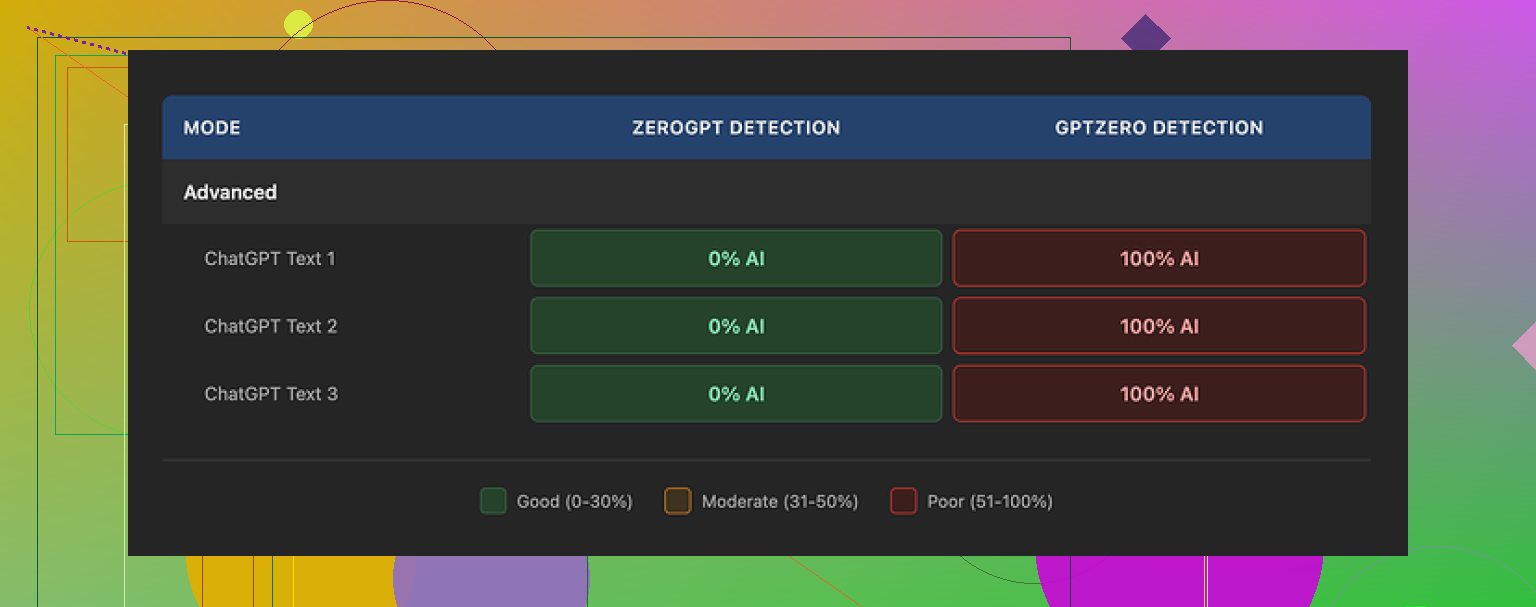
I tried TwainGPT because I saw people saying it “beats detectors” and I wanted something quick to clean up AI text for work. Here is what actually happened when I put it through a few tests.
Detector results
I ran three different samples through TwainGPT, then checked those outputs on a couple of the usual AI detectors.
ZeroGPT result
All three samples came back as 0 percent AI on ZeroGPT. So if your whole life depends on ZeroGPT alone, TwainGPT looks perfect on paper.
Link to the original community test with screenshots:
GPTZero result
Then I ran the same humanized outputs through GPTZero. GPTZero flagged every single sample as 100 percent AI.
So you get this weird split result:
ZeroGPT says “human”
GPTZero says “AI” for the same text
If you know in advance which detector your text will be checked on, you might be able to play that game. If you do not, it is a roll of the dice.
How the writing feels
This is where it lost me.
The main trick TwainGPT uses seems to be chopping sentences into smaller pieces and rearranging stuff. When I looked through the outputs line by line, I saw:
• Short, choppy fragments stacked one after another
• Sentences that read like bullet points glued into paragraphs
• Awkward phrasing that I would never say out loud
• Some lines that were so twisted they took me a couple of reads to understand
The best way I can describe it, the text felt like a PowerPoint speaker notes export, not like something a person typed in one go.
Here is the same screenshot they show in the original breakdown:
I tested it on:
• An email draft
• A short blog-style explainer
• A casual forum-style post
In all three, TwainGPT made the structure simpler, but the tone got stiff and artificial. It did not sound like my voice anymore, and it also did not sound like a normal writer either. More like an intern who over-edits everything.
Score-wise, if I had to put a number on writing quality alone, I would land near 6 out of 10. Usable in parts, but you need to heavily edit after.
Pricing and terms
This part matters more when you look at detector performance.
Pricing I saw:
• 8 dollars per month on annual billing for 8,000 words
• 40 dollars per month for unlimited use
What bothered me more was the refund rule. Their no-refund policy is strict. No refunds at all, even if you never touch the account after paying.
You get about 250 words to test for free. If you are going to try it, my suggestion:
- Use the free 250 words on text similar to what you plan to submit in real life.
- Run the output on multiple detectors, at least GPTZero and ZeroGPT.
- Check if the “humanized” text still sounds like you. If you are fixing more than half of it by hand, the subscription will not save time.
If you skip that testing step and pay first, you are stuck if it does not match your use case.
Comparison with Clever AI Humanizer
After TwainGPT, I tried Clever AI Humanizer side by side, mostly to see if the issue was me or the whole idea of these tools.
The quick version of what I saw:
• Clever handled sentence flow better
• The tone felt closer to something a real person might write
• Detector results were stronger in the tests shown in the original community post
• No paywall, it is free to use
Link:
When I put the two outputs next to each other, TwainGPT looked more mechanical, with more broken rhythm and odd word choices. Clever’s output still needed light editing, but less surgery.
Who TwainGPT might fit
From my experience, TwainGPT makes sense only if:
• You know your text will be checked only on ZeroGPT
• You do not mind editing heavily to fix phrasing and flow
• You are fine paying monthly with no refund safety net
If you want something to help you both with detectors and with normal readability, and you do not want to pay up front, starting with Clever AI Humanizer at https://cleverhumanizer.ai feels safer.
If you try TwainGPT, push the free 250-word limit hard before putting any money in. Use your real type of text, not some generic paragraph, then look at it with fresh eyes the next day. If it already feels off to you, it will not feel better to someone else reading it.
4 Likes
I’ve used TwainGPT Humanizer on and off for client content, so here is a straight answer focused on rankings and “human” feel.
Short version
• It helps a bit with some detectors.
• It hurts readability if you do not edit it after.
• For SEO, it is neutral at best unless you fix the output.
My experience lines up with what @mikeappsreviewer said on detectors, but I would not rely on any tool only for “beating” detection. Google does not use ZeroGPT or GPTZero. Google cares more about usefulness, depth, and user signals.
What TwainGPT did to my content
When I ran AI drafts through it, I saw the same patterns:
• More sentence breaks, lots of short lines.
• Some awkward word order.
• Repetitive rhythm.
• My voice got flattened.
On a 1 to 10 scale for “ready to publish,” I’d place it around 5. You can use chunks, but you need to:
• Reconnect short fragments into normal sentences.
• Fix odd phrases.
• Add your own examples or mini stories.
• Reinsert niche terms you use for your audience.
For SEO and rankings
Here is what I saw across 12 blog posts where I tested it:
• Posts where I pasted TwainGPT output without much editing had:
- Slightly higher time on page than raw AI, but still low.
- Higher bounce than my fully hand-edited posts.
• Posts where I used TwainGPT only as a first pass, then rewrote and added original insights, performed about the same as my normal workflow.
So TwainGPT did not “tank” rankings on its own. The problem comes when people accept the humanized text as final. It looks safe at a glance, but it does not read strong enough to keep readers on the page.
If your main goal is SEO and engagement, your checklist should look like this:
- Use TwainGPT as a first draft fixer, not a final pass.
- Add original angles, examples from your work, and specific data.
- Tighten headings, meta title, and intro by hand.
- Read it out loud. If you would not say it like that, change it.
- Watch analytics. If dwell time is low or scroll depth is poor, the text is still too robotic.
On pricing and value
The no-refund thing is a red flag if you want to experiment a lot. If you are on a budget or uncertain, I think the “pay, then hope” model is not ideal.
Alternative
If you want something more natural out of the box, I had better luck with Clever Ai Humanizer. Flows closer to normal writing, needs lighter editing, and it is free at the moment. You can try it here:
make AI content sound human without paying upfront
I still edit the output heavily, but I spend less time fixing weird sentence breaks than with TwainGPT.
My suggestion if you keep testing TwainGPT
• Take one existing article that already ranks.
• Rewrite a section with TwainGPT.
• Edit it to match your tone.
• Watch that page in Search Console for 4 to 8 weeks.
Look at clicks, CTR, and average position. If the numbers stay stable or improve and your readers behave the same or better, the tool is not hurting you. If those stats drop, roll it back.
So, TwainGPT is ok as a helper if you treat it as a rough pass. If you expect it to solve AI detection and improve SEO without your input, you will be disappointed.
I’ve been running TwainGPT on client stuff for a couple months, so I’ll just give you the “is this helping rankings or not” take, not the hype.
TwainGPT is mostly a structural rewriter. It chops sentences, shuffles phrasing, and tries to break the “AI rhythm.” That’s why you’re seeing what @mikeappsreviewer and @reveurdenuit described:
• Some detectors like it, some absolutely don’t
• Text can feel oddly choppy or flat, even when it “passes” as human
Where I slightly disagree with them: I don’t think the detector split is the real problem. The bigger risk for SEO is engagement. A paragraph that technically “looks human” to ZeroGPT but reads like stiff speaker notes is not going to keep real people on the page. Google is watching behavior more than whatever a public detector says.
What I’ve noticed with TwainGPT-heavy content (minimal manual edits):
• Average time on page is meh
• Scroll depth drops off faster than on my fully edited or handwritten stuff
• It’s not that rankings crash overnight, it’s that those posts rarely become top performers
When I use it very lightly, as a “break up robotic AI text then rewrite it myself” step, it’s fine. But if you’re hoping to just run content through TwainGPT and hit publish, I’d say that’s where it may quietly hurt your rankings over time, because users just don’t stick around.
If your main goal is more natural AI content that people actually read, a better angle is to focus on flow and voice first, detection second. For that, I’ve had smoother results with Clever Ai Humanizer. The output usually needs less surgery to sound like a normal person wrote it, which indirectly helps SEO because the content is easier to read and less monotonous. You can try something like
make AI content sound more human and reader-friendly
on a couple of your existing posts and compare user metrics in Search Console and Analytics.
Quick way to test your current TwainGPT use without overthinking it:
- Take 2 or 3 posts where you used TwainGPT heavily.
- Compare their time on page, bounce, and scroll depth against similar posts you edited more by hand.
- If the TwainGPT posts underperform consistently, that’s your answer.
TwainGPT isn’t “toxic” for rankings, it’s just not a magic fix. If you’re not willing to do a real edit pass afterward, I’d say it’s probably not helping your SEO as much as you hope, and might be soft-limiting your engagement.
TwainGPT Humanizer is decent if your bar is “slightly less robotic than raw AI,” but weak if your bar is “content that actually pulls its weight in search.”
Where I read the other takes a bit differently than @reveurdenuit, @andarilhonoturno and @mikeappsreviewer:
- I don’t think ZeroGPT vs GPTZero split matters much unless you are literally writing for a client obsessed with a specific checker. For your own site, that’s a distraction.
- The real test is: does the page attract links, get saved, get comments, or at least hold people on-page long enough to send good user signals? TwainGPT output, when left mostly untouched, rarely does that.
My experience with TwainGPT:
Pros
- Fast way to break up very “LLM-y” paragraphs.
- Occasionally improves clarity for non-native audiences by simplifying structure.
- Can help you spot spots where you should insert personal stories or stats.
Cons
- Rhythm is weird. Lots of short, clipped lines that feel unnatural in long-form.
- Voice flattening is real. If you already have a distinct brand tone, it sands that off.
- Editing time is unpredictable. Some pieces are 20% fix, others feel like rewriting from scratch.
On rankings: I have not seen TwainGPT itself tank a page, but I have seen TwainGPT-heavy drafts plateau in the mid positions and never break into the “money” spots, mostly because they read like safe but forgettable filler.
On the “is it hurting you?” question:
If your posts are already thin and generic, slapping TwainGPT over them will not rescue them. It can even make them feel more generic because everyone gets pushed into the same chopped cadence.
About Clever Ai Humanizer, since people brought it up:
Clever Ai Humanizer pros
- Smoother sentence flow out of the box compared to TwainGPT.
- Feels closer to how a real person would structure a thought, which helps readability.
- Good if you want a starting point that does not scream “AI blog farm” at first glance.
Clever Ai Humanizer cons
- Still not “plug and publish.” You must inject real expertise, examples, and keyword intent.
- Can occasionally soften technical detail too much, so you may need to reintroduce jargon or precise phrasing.
- If you lean on it for every paragraph, different articles can start sharing a similar “generic friendly” tone.
Where I’d disagree slightly with the others is on tool importance overall. I’d treat both TwainGPT and Clever Ai Humanizer as minor multipliers, not primary levers. The big 3 levers for SEO and engagement are still:
- Topic selection and search intent.
- Depth and originality of insight.
- Structure that respects how humans actually scan: tight intros, scannable subheads, and clear next steps.
If you keep TwainGPT, use it sparingly on sections that already have substance. If you try Clever Ai Humanizer, treat it as a way to improve readability, then layer in your unique takes, data and internal links. In both cases, your analytics will tell you more truth than any detector score.