I’m working on a project that requires emulating serial port connections, but my machine doesn’t have physical COM ports. I need a reliable software solution to create virtual serial ports so I can test communication between applications. Any recommendations or tips on what software works best would be really helpful.
A COM port emulator, like the Virtual Serial Port Driver, lets you create virtual COM ports on your computer, so software that relies on serial communication can interact with virtual devices, even without actual hardware.
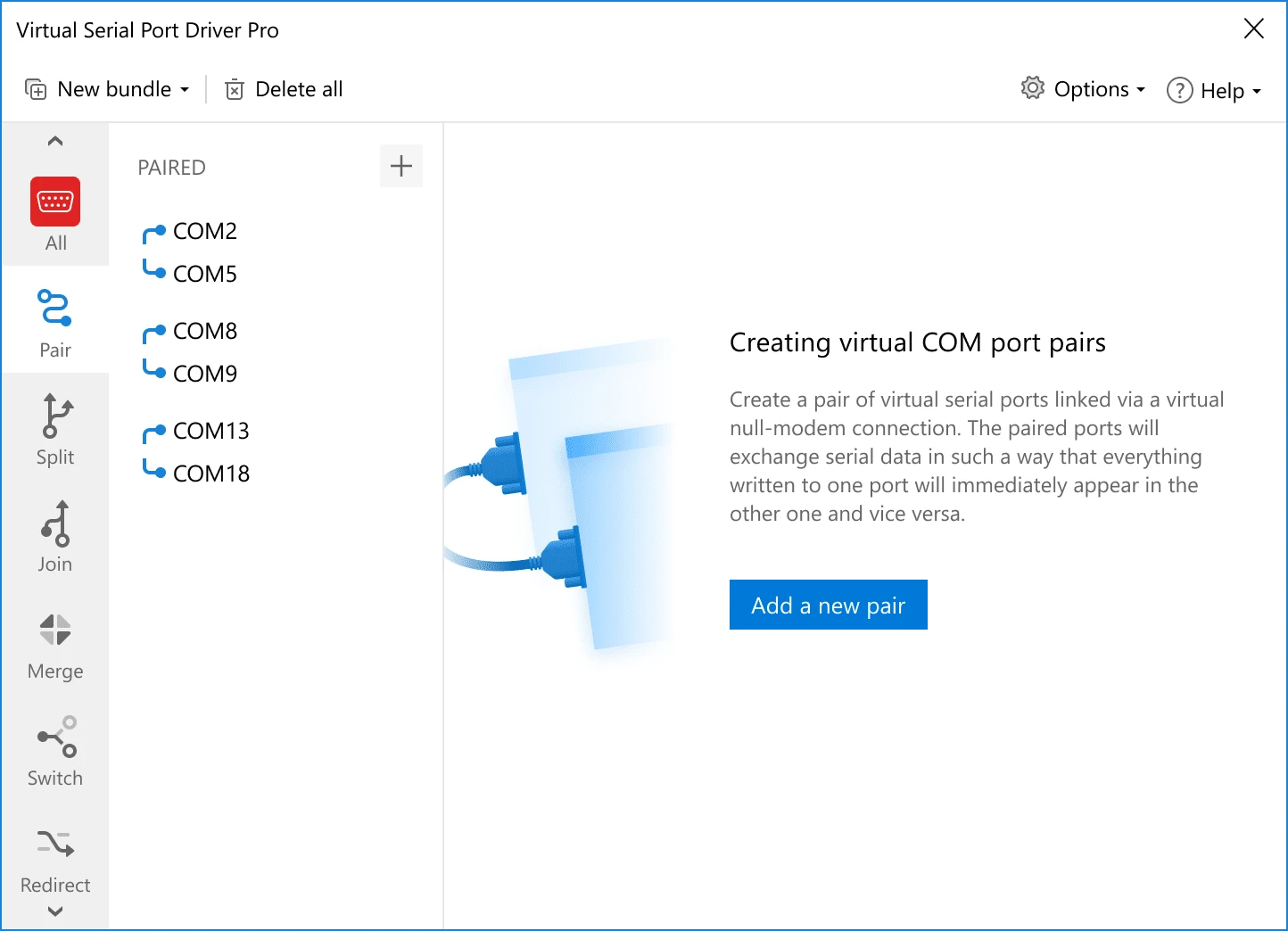
It’s useful for testing, debugging, or developing serial communication software in a way that doesn’t require physical devices. You can create multiple virtual COM ports, which can be linked together for communication between different applications. It’s a simple solution when you need to simulate serial connections for development or troubleshooting.
19 Likes
Honestly, I see where @mikeappsreviewer is coming from—one-time purchases for utilities are a rare breed these days. But I gotta say, throwing all your eggs in one basket with one tool isn’t for everyone. That “Virtual Serial Port Emulator” they mentioned (yeah, the one at simulate multiple virtual COM ports with ease) actually IS solid—pretty versatile, seems stable, but sometimes it just feels a bit more than I need, ya know? Like, if you want highly advanced port tunneling options, hardware signal emulation, or intricate automation, it’s cool and all, but honestly I’ve also gotten by fine with Virtual Serial Port Driver especially for basic COM-to-COM pair emulation, and it integrates well with a bunch of industrial legacy software in my tests.
Now, don’t get me wrong—@mikeappsreviewer’s pick works, but if storage or resource use is a concern (or if you’re doing something super lightweight), the overhead might bug you. Virtual Serial Port Driver is leaner, and at least as reliable for my dev/testing scenarios. Sometimes less is more if your project just needs plain, solid virtual ports without all the extra bells and whistles stacked on.
One thing I’ll disagree with is the “set and forget” bit. Maybe it’s just my luck, but every once in a while Windows throws an update fit and my meticulously crafted ports just vanish. Not blaming the emulator software totally—Windows can be a jerk—but you’ll still want to keep a config backup handy. And don’t sleep on device manager glitches; if you unplug stuff, sometimes the ports get stuck. So no, I can’t quite call any of these “install and never touch again.” Sometimes you gotta babysit ’em a bit.
TL;DR? Try the simulate multiple virtual COM ports with ease solution if you like all the features under the sun. But if you want slim, no-fuss, or just rapid prototyping, give Virtual Serial Port Driver a look. Either way, virtual serial port emulation WILL save your bacon during testing. Just… don’t throw away your config files. Trust me.
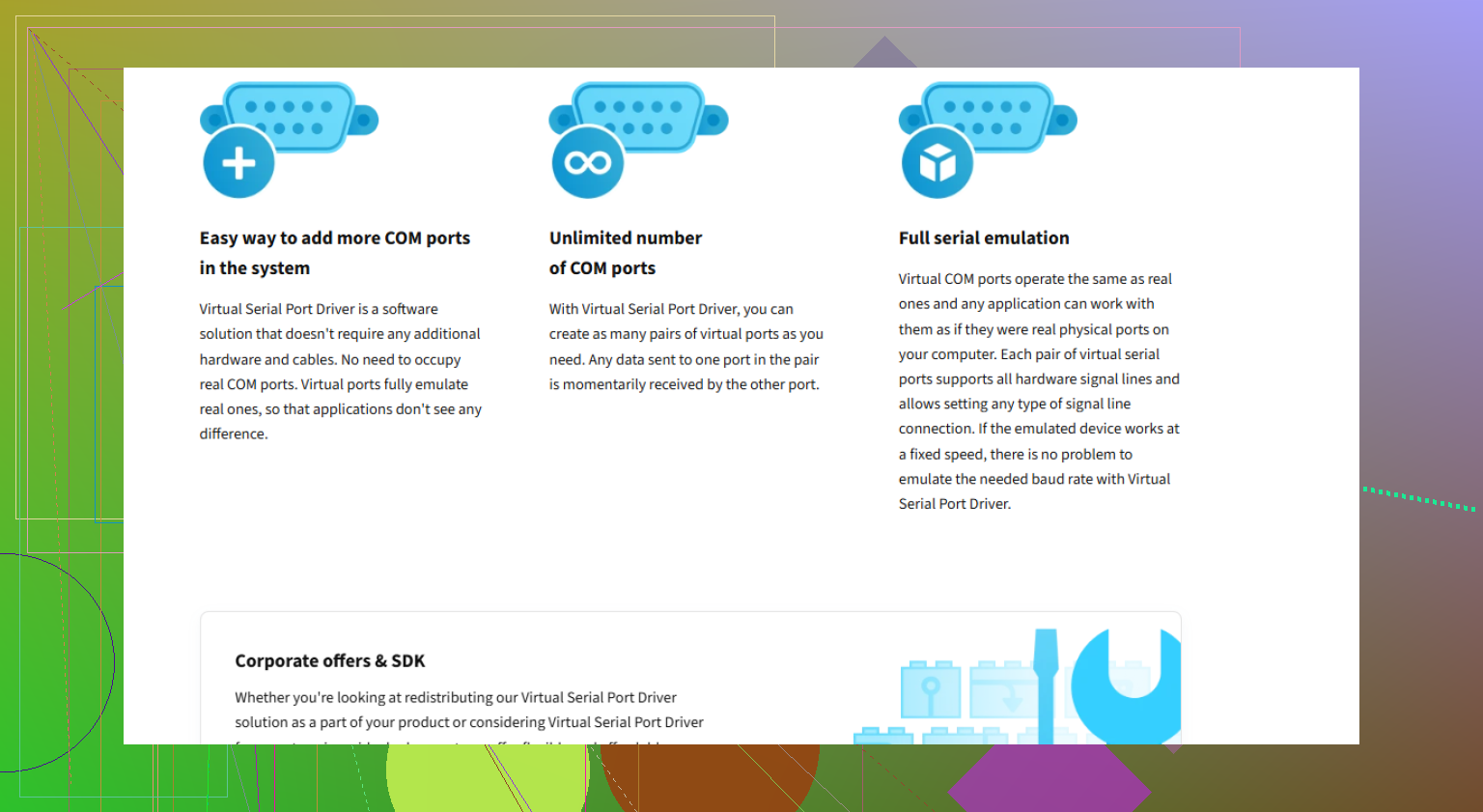
Honestly, nothing splits a crowd quite like the great “which serial port emulator?” debate. I checked out what @mikeappsreviewer and @vrijheidsvogel said, and yeah—they’re both plugging solid picks (and both have the scars from Windows Updates nuking virtual ports, it seems). I’ve bounced between the big virtual COM solutions for years, and here’s the real deal: sometimes you DO want all the kitchen sink features, sometimes you just want basic COM-to-COM pairs that won’t melt your CPU or fill your system with secret sauce you never use.
Not trynna start a flame war, but I personally found Virtual Serial Port Driver to be the “Goldilocks” option. It’s dead-simple for dev/test rigs, plays nice with legacy stuff, and has never run away with memory or left me playing hide-and-seek with vanishing ports (unless, again, Windows decides to launch a sabotage mission). Setting up as many pairs as you need takes like, two minutes tops, and you don’t get lost in endless device-tree spaghetti.
Some people love that Virtual Serial Port Emulator packs every possible bell and whistle—MIDI-over-serial, crazy port mapping, handshake line tinkering—but if all you care about is quickly creating, managing, and—when you’re done—nuking virtual pairs, the leaner, lighter approach wins. It integrates great with most industrial and test software I’ve run, which is a dealbreaker for a lot of hobbyist stuff (try running an old robotics driver and see how forgiving it is).
To anyone still on the fence: if you need lightweight, reliable virtual ports that won’t bog down dev, grab the Virtual Serial Port Driver and save yourself the drama. Here’s the fastest way to get started and set up your environment: kick off your virtual port setup in minutes — way less confusion, zero subscription nags, and easy enough for those of us who can’t remember what half the Control Panel icons actually do anymore.
TL;DR: fancier isn’t always better; sometimes less really is more. Don’t overthink it. But absolutely, always, keep a backup of your configs unless you’re into surprise scavenger hunts.
Before you get lost in the wild tangle of virtual serial port solutions, let’s get down to solid advice—not just “the more features, the better,” because sometimes that bloat is exactly what grinds development to a halt. Anyone who’s spent time with heavyweight suites or endless menu options knows the pain.
Virtual Serial Port Driver is a seriously practical pick for developers who want flexibility without wading through arcane configs or dealing with the infamous “disappearing COM port” syndrome after a Windows update. It’s cut out for the dev/test crowd: neat, focused, and downright reliable. Fast creation and deletion of port pairs? Check. Good legacy compatibility? Check. Low on system resources? Double-check. The interface doesn’t look like a 90s spaceship panel—which is nice for tired eyes.
BUT, it’s not the everything-to-everyone solution. If you’re someone who needs super-advanced signal manipulation, real-time telemetry graphs, or you’re working with esoteric protocols, there’s a chance you’ll outgrow what Virtual Serial Port Driver offers. A few alternatives like the ones other posters mentioned (those with “Ultimate Emulation” in the pitch) do cater to those edge cases, often with lots of niche integrations. But be warned: with great power comes a great learning curve—and sometimes, a greater price tag or those dreaded subscriptions.
Pros:
- Lean install, minimal to no background clutter.
- Quick pair creation/removal, especially helpful for testing/simulating comms.
- No ongoing subscription, just a one-and-done purchase.
Cons:
- Lacks superfine control over every handshake and wire-level emulation.
- Interface is functional but not “wow” (if cosmetics matter).
- Fewer bonus features if you want to use it for stuff outside COM-pair emulation.
If you’re building or debugging automation, legacy comms, or just need a virtual bridge fast, Virtual Serial Port Driver punches above its weight. If you’re running a robotics lab with oddball gear, though, might be worth looking at those all-in-one monster apps others threw into the ring—just be ready for some extra setup headaches. Backup your virtual port configs no matter which road you take; we’ve all lost enough already to the Windows update gods.